Almost there...
|
BlogOur First Stainless Steel Pans
We recently bought our first set of stainless steel pans, and they have honestly changed the game for me. I’ve pretty much used them every day for the last six months, and I cannot imagine cooking without them now. I used to think that I made good chicken: putting the breast under the grill with a cool array of spices and brining it beforehand. The grill gave it a slight char, and the chicken remained juicy.
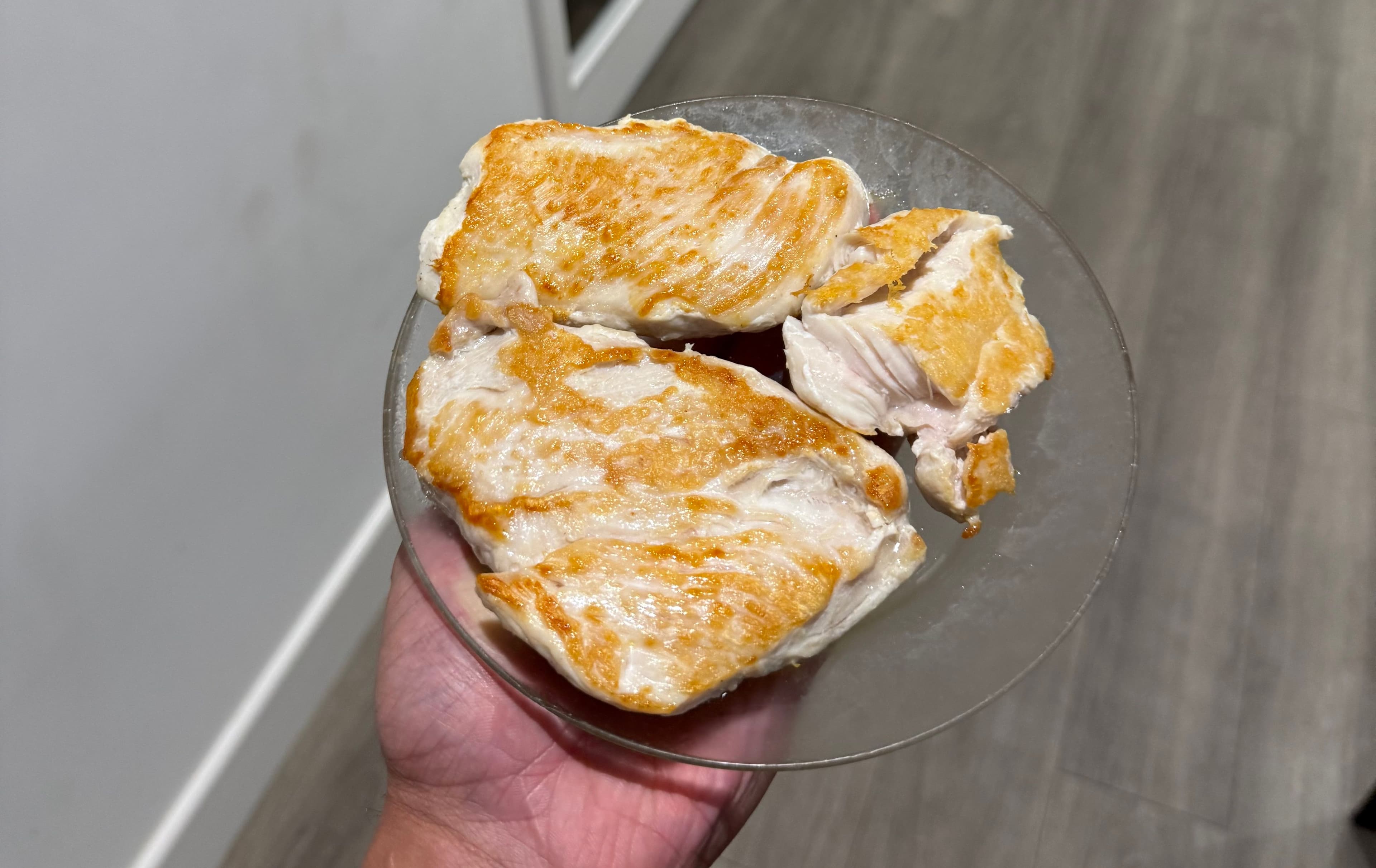
I have not made that chicken in six months. I don’t think I’ve even seasoned chicken with more than salt and pepper since, and that’s all down to the pan. The juice, texture, and crispiness that come off a perfectly cooked chicken breast on a stainless steel pan are ridiculously good. It was so shocking to me—I was like, how is that even possible? Grill vs steel pan can’t be that much of a difference, right?
Why pan fried tastes better
Well, apparently this is all down to the Maillard reaction. The better heat transfer and surface contact create deeper browning and better texture, all whilst keeping the moisture inside the meat. Better heat transfer means the meat can brown quickly (relative to a grill) and develop this browning before the chicken’s inside dries up and overcooks. Simple answer, but so interesting. Whilst I was researching this topic, I also learned a few other things which I really liked, so I’ve put them below.
A Deeper Look
The Maillard reaction is not just one reaction, but rather a set of chemical reactions between the amino acids in the protein and the sugars. It usually happens above around 140–165°C. This is not to be mixed up with caramelisation, though, since that’s only sugars, not proteins.
When you heat the chicken, the proteins break down into free amino acids (proteins are made up of amino acids, so you can think of this as dismantling a Lego structure into individual bricks). These free amino acids then react with the sugars present in the meat (in the form of glucose, ribose, and glycogen), which then recombine and make thousands of different compounds. It is these different compounds that form the new flavours you taste on a browned chicken, as opposed to a boiled chicken breast.
But how? Just because new compounds are formed, how does that relate to flavour? The compounds are volatile, meaning that they easily evaporate and therefore hit your olfactory receptors in your nose (the ones that detect odour molecules). Since taste is mostly smell, the chicken now tastes completely new.
You might then ask, okay, but why is it a good flavour? We aren’t taught that browned chicken tastes better than non-browned chicken, but something deep inside us just knows. It turns out it’s to do with evolution; our brains have evolved to crave these smells/tastes because they are usually associated with energy-dense, protein-rich food. So cool.
Oh, and one more thing. Why does the Maillard reaction only happen on the surface of the food? The Maillard reaction needs dry conditions because when water gets involved, the temperature of that surface caps at around 100°C. Between the combination of higher moisture content in the meat and the fact that the middle of the chicken doesn’t get to the same temps as the outer surface, the Maillard reaction is seen on the outside.